Organically Certified
Van Gelder is organically certified by the Skal foundation. The certificate ensures that the company is equipped to process, package, import, trade, and store organic products.
Vertical Farming
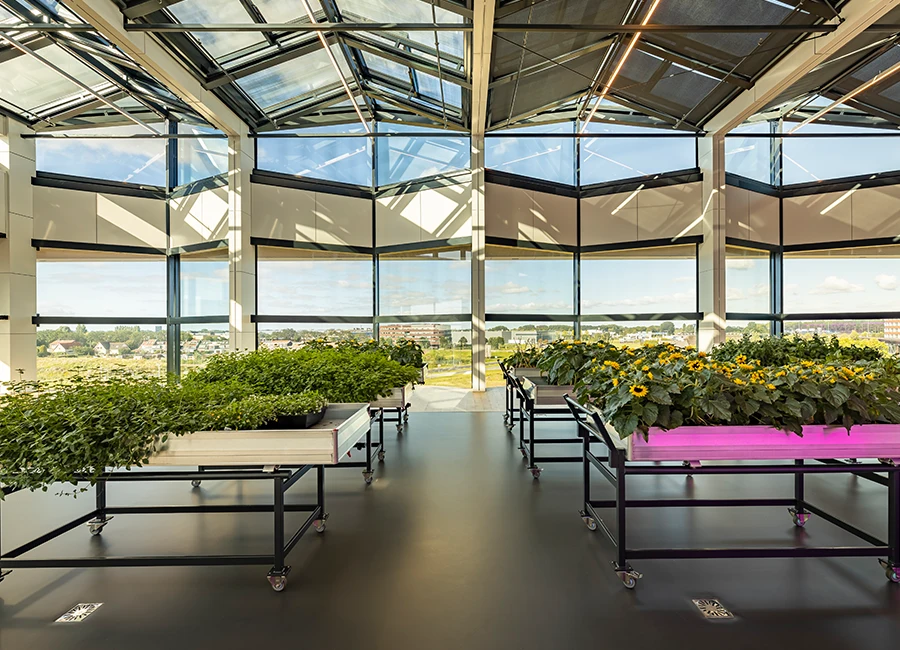
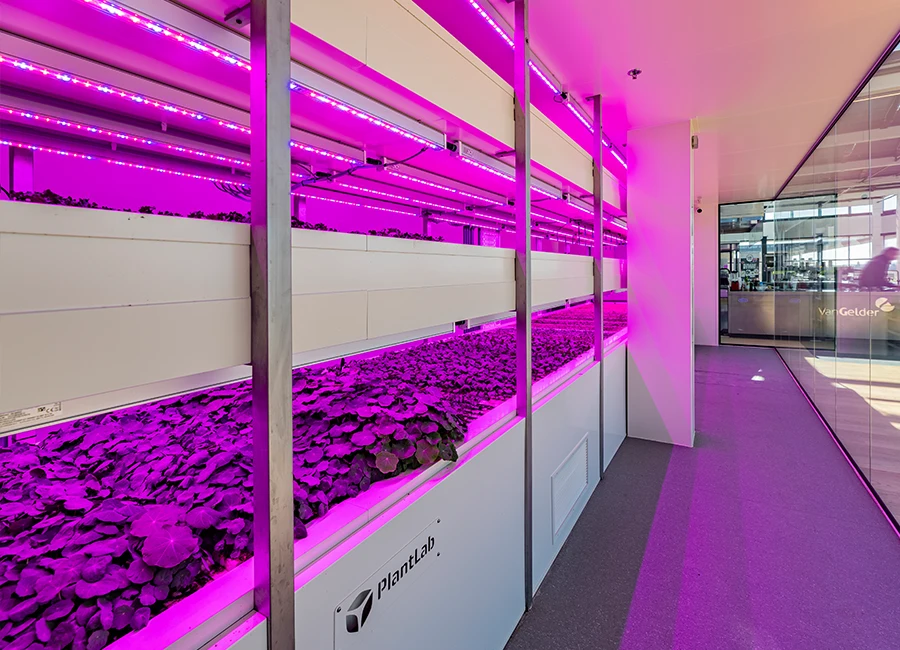
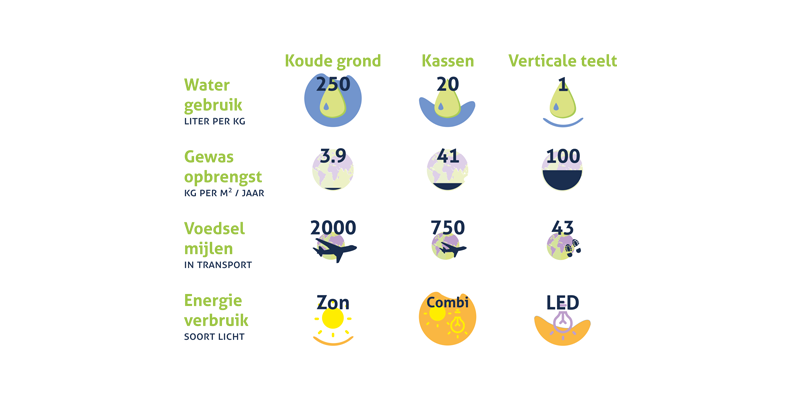
Together with our partner PlantLab, we invest in vertical farming of lettuce and herbs, among other crops. This contributes to reduced CO2 emissions. The future of this technique is promising—it can be implemented anywhere in the world, as long as water is available.
Plant-Based
The environmental impact of eating vegetarian is 69% lower than that of consuming meat and fish. That’s why Van Gelder is committed to offering strong alternatives in the market. As the number of flexitarians, vegetarians, and vegans continues to grow, the foodservice industry must increasingly meet these demands. We are fully invested in this and launched a fully plant-based product range in 2022, which is continuously being improved and expanded. Using a variety of fruits and vegetables such as jackfruit, fava beans, and mushrooms, we produce both base ingredients and ready-made options. We also believe it’s essential that these alternatives are genuinely healthy, minimally processed, and, of course, full of flavor.
Reducing food waste
At Van Gelder, Class 2 fruits and vegetables serve as the starting point as semi-finished products for developing new items. For example, our tomato salsa is made from tomatoes that are unsuitable for sale solely because of their appearance. Overripe or bruised avocados get a second chance in guacamole, which, thanks to pascalization, does not discolor and has a longer shelf life.
Planet Proof Farming
A literal track & trace for fruits and vegetables. It ensures fertile soil, clean water, and healthy crops. This is a process that we directly engage with our growers both domestically and internationally.
We do 90% of our purchases with sustainable suppliers who also implement an active CSR policy. All our suppliers must be ISO, eco, EURO, and Global-Gap certified. Our growers are not just our suppliers but also our partners. Here are a few examples:
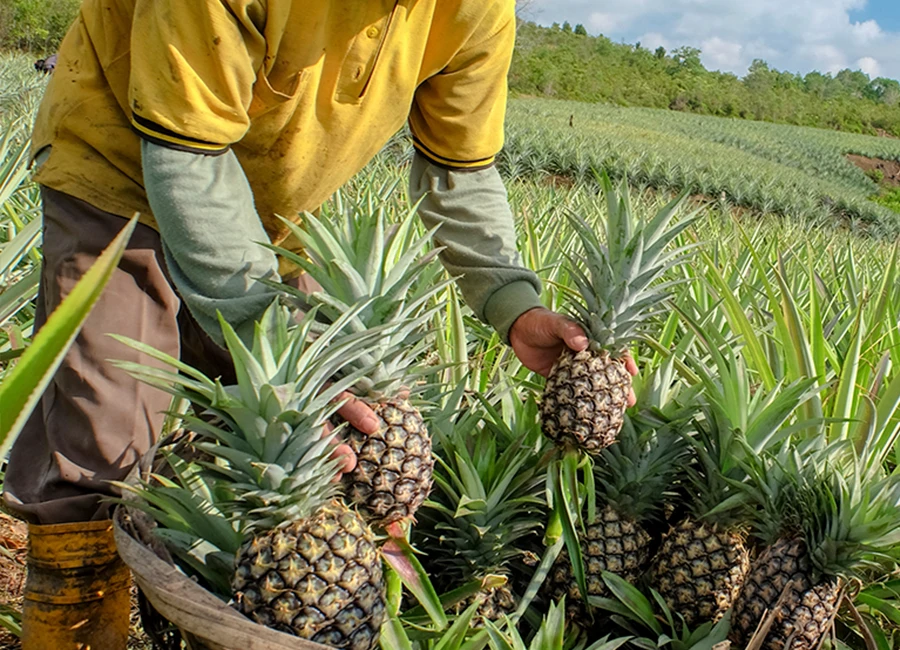
Pineapple from Costa Rica
For every box of pineapples sold, a contribution is made to the savings fund. This enables our grower to provide fair wages for their employees and finance local education for children.
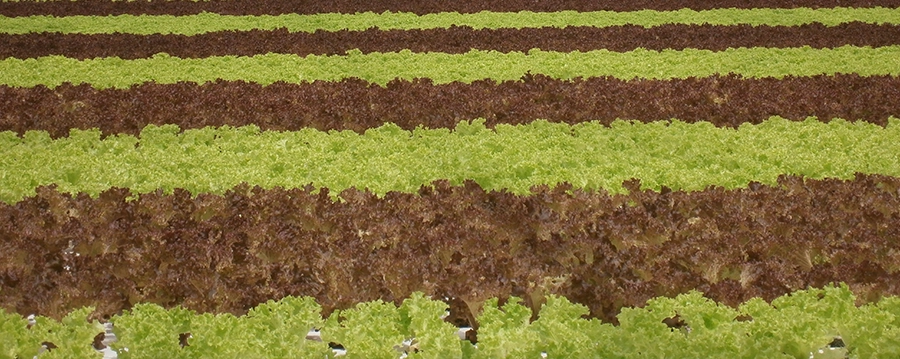
Boer & den Hoedt
Less than 500 meters from Van Gelder, the Ridderkerk lettuce grower cultivates soft lettuce varieties in an innovative way, using water. This allows for consistent quality year-round, at a level that would be impossible with soil. Additionally, growing in water results in a cleaner (and thus safer) product.
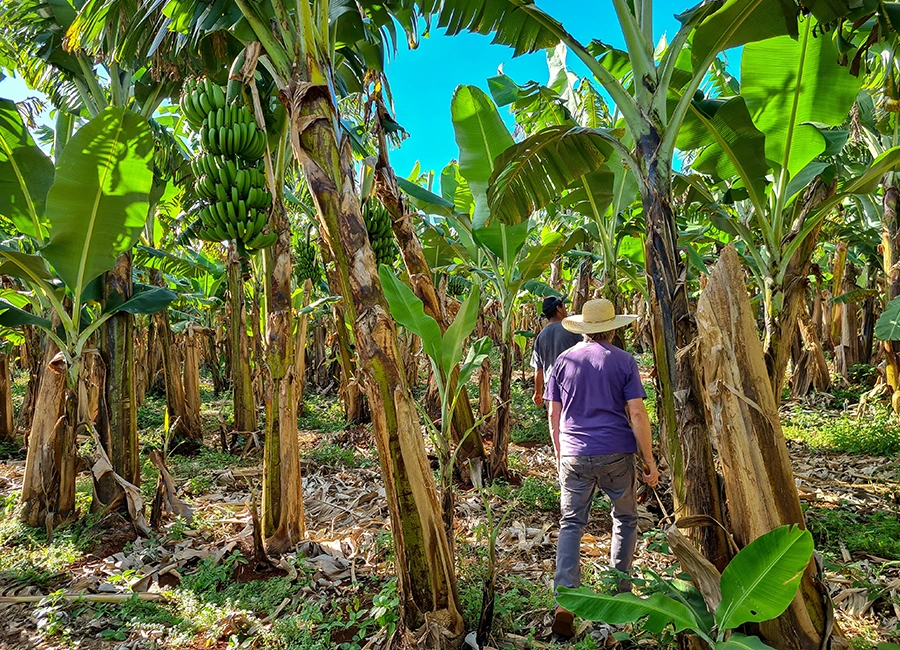
Chiquita bananas
Together, we have a project running around the village of Theobroma in Panama. For every box of bananas sold, a portion of the proceeds goes towards building schools and houses, as well as establishing digital infrastructure.
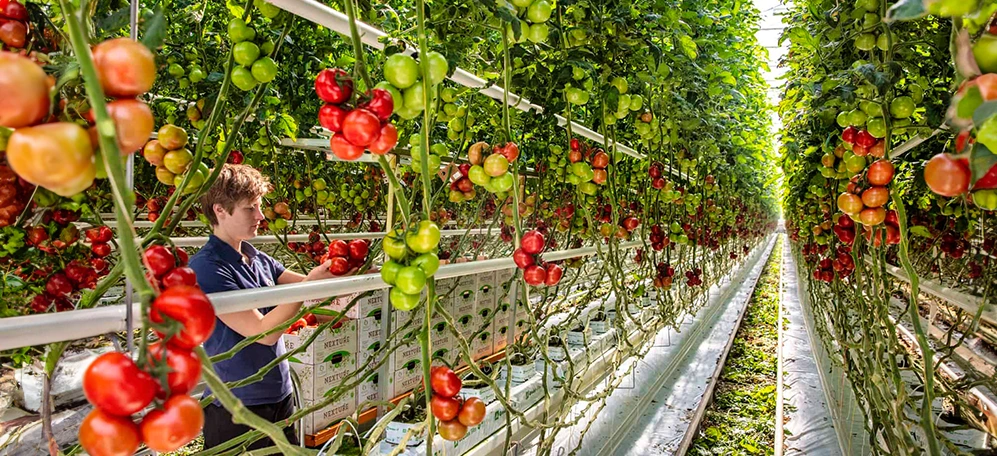
Firma Duijvenstijn
Our tomato grower from Pijnacker processes around 10 million kilos of fresh tomatoes per year and extracts heat from the earth. Once pumped up, the water flows through a heat exchanger where the water stream heats the greenhouse heating system. The pumped water is then returned to the underground layer to warm up for reuse.
Socially Engaged
- In 2021, our Experience Center was opened with the goal of inspiring everyone in the field of vegetables and fruit: from consumers to customers. Here, we share our vision to make the Netherlands eat healthier and more sustainably. Each season, we offer a new vegetarian menu in our testing center.
- Every year, Van Gelder hosts around 750 children. We aim to help make healthy food more accessible and approachable through initiatives like GrowWizzKid.
- We are a partner of JOGG Barendrecht and Ridderkerk, which means we sponsor healthy school breakfasts, sports days, and activities. Six times a year, primary schools visit our location for tours and taste lessons.
- In collaboration with the city of Rotterdam and JINC, we are creating a lesson plan for primary and secondary schools.
- Since 2020, we have been working with Stap voor Stap: job coaching for employees with a distance to the labor market.
- Since 2023, we have started a new project with the BAR municipality: recruiting candidates from various backgrounds and providing guidance through the municipality.
- Each year, we offer students internships within our organization to complete their studies.
- Every year, temporary workers are offered a permanent position.
Packaging
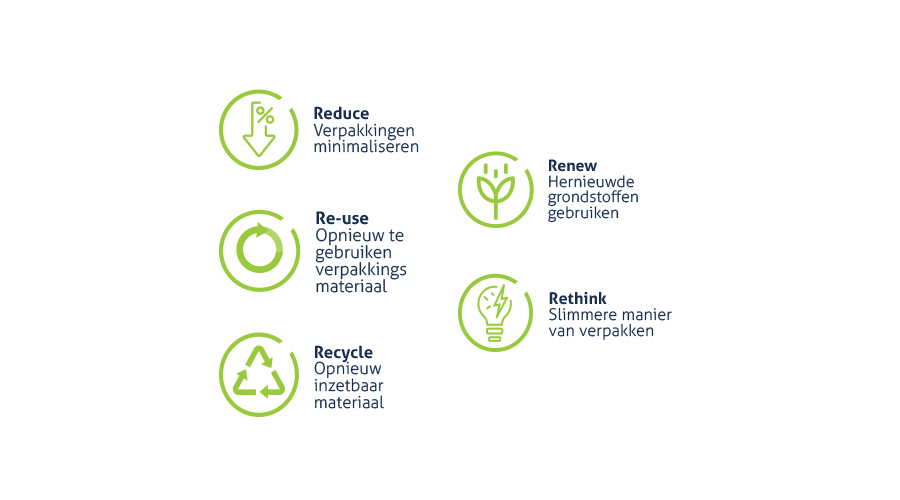
Packaging that is better for the environment is not always good for the product. Packaging also represents food safety, product quality, and longer shelf life. This requires carefully considered choices. We are constantly working on making our packaging more sustainable, using five key pillars. Here are some examples of recent improvements:
- Replaced pallet stretch film with nano film:
55% material saving - New size fruit bags on rolls:
17.5% material saving - Reduced thickness of BOPP film:
25% material saving - Replaced PP gastro trays with PET:
15% material saving
The Building
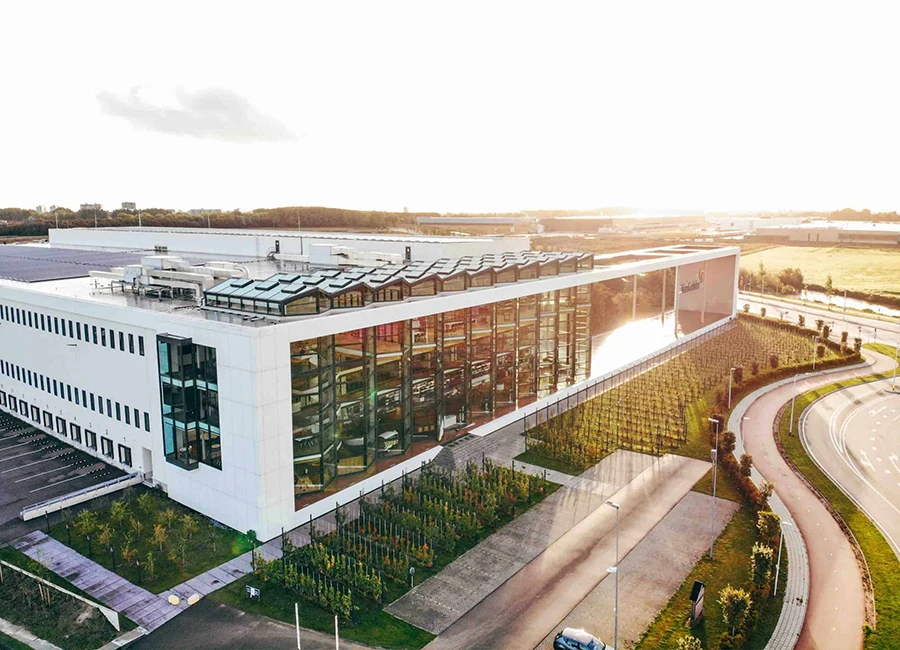
With the BREEAM5 Outstanding certificate, Van Gelder has tangible proof of sustainability. The newly built building on Krommeweg is one of the 5 most sustainable buildings in the Netherlands and was nominated for the 6 best BREEAM projects worldwide. Responsible material choices and minimal energy costs were prioritized in its design.
Waste Heat & Water Reduction
- No fossil energy is used for lighting, ventilation, heating, cooling, lifts, and server rooms.
- Energy-efficient goods lifts have been chosen. The drive motor adjusts the speed based on variable voltage. Regenerated braking energy from the lifts is returned to the power grid.
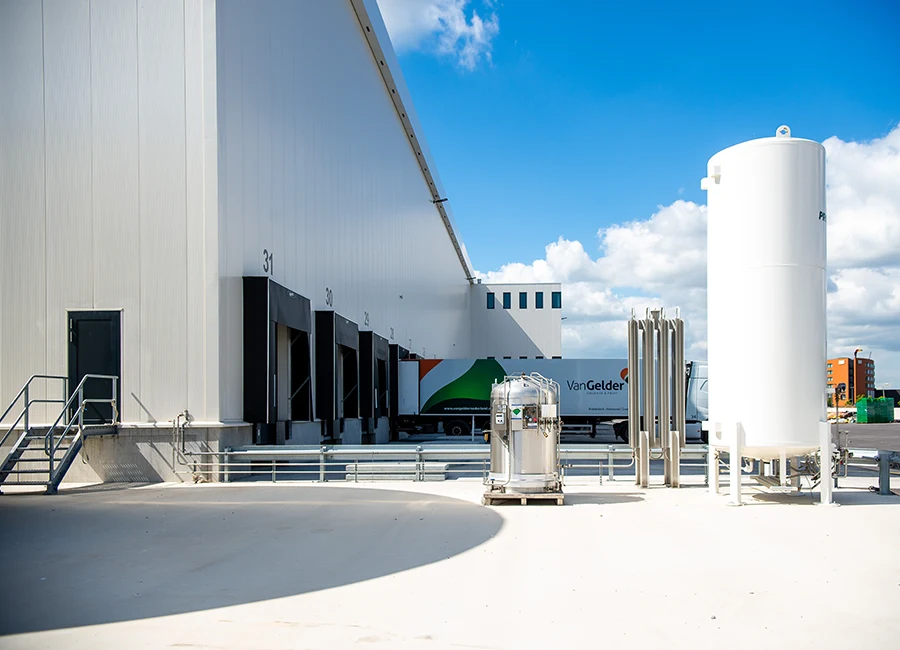
- Loading/unloading docks and expedition areas are designed to minimize the escape of heat or cold from the building during use.
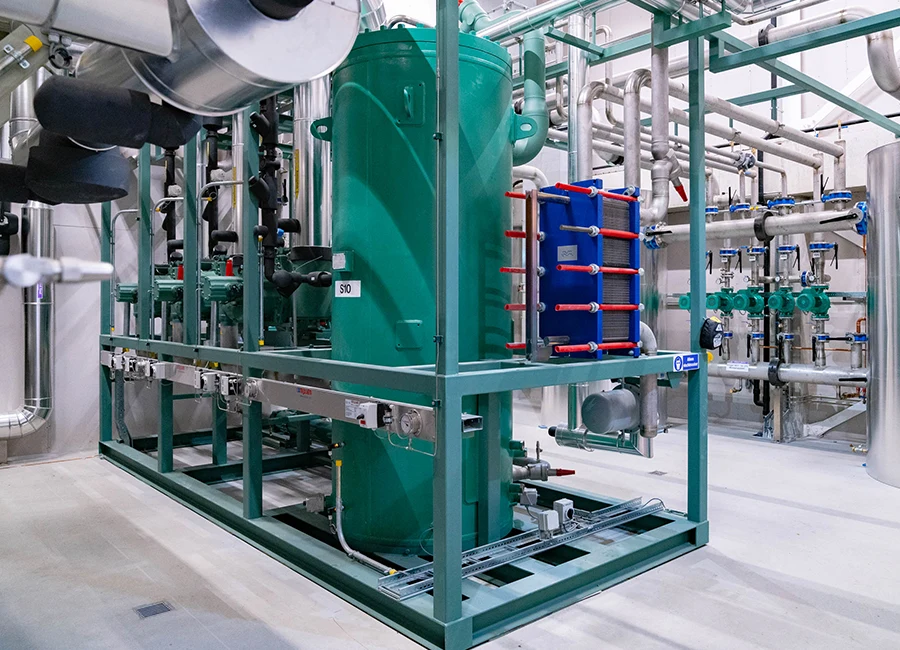
- Electric motors of the transport system serve as an additional heat source. One of the compressors is used as a heat pump.
- Waste heat is reused in the Experience Center, for defrosting air coolers, underfloor heating in spaces, heating a storage area for packaging materials, and for the water used in the crate washing installation.
- Rainwater is collected, purified, and used for sanitation purposes.
- For food safety, toilets are equipped with sensors that automatically shut off the flushing water. All streams are fitted with additional meters for greater insight.
Logistics
- Awareness of the impact reduction of our logistics services, no unnecessary kilometers
- Reducing fuel consumption
- Maximizing loading capacity in packaging and vans/trucks, fewer cars on the road
- Combined transportation
- As soon as possible (depending on the temperature that needs to be monitored in the vehicles for food safety), replacing all vehicles with electric vehicles.
This is what we do additionally
- LED lighting
- Encouraging public transport and cycling use
- Bus stop at the door and public transport information in the central hall
- Reducing print/copy, digitizing more tasks
- Solar panels on the roof
- The building is completely CO2 neutral, no gas connection
- Nesting boxes for various bird species
- Choice of steel instead of concrete (more environmentally friendly)
- Number of charging points for electric cars at the building has doubled, and the power of the poles has been increased